
Why AI Caricature Went Viral: A Deep Dive into the 2026 Phenomenon
Why did AI caricature go viral in 2026? A deep analysis of the underlying logic behind phenomenon-level spread across four dimensions: technology maturity, social currency psychology, platform algorithm amplification, and low barriers to user creation.
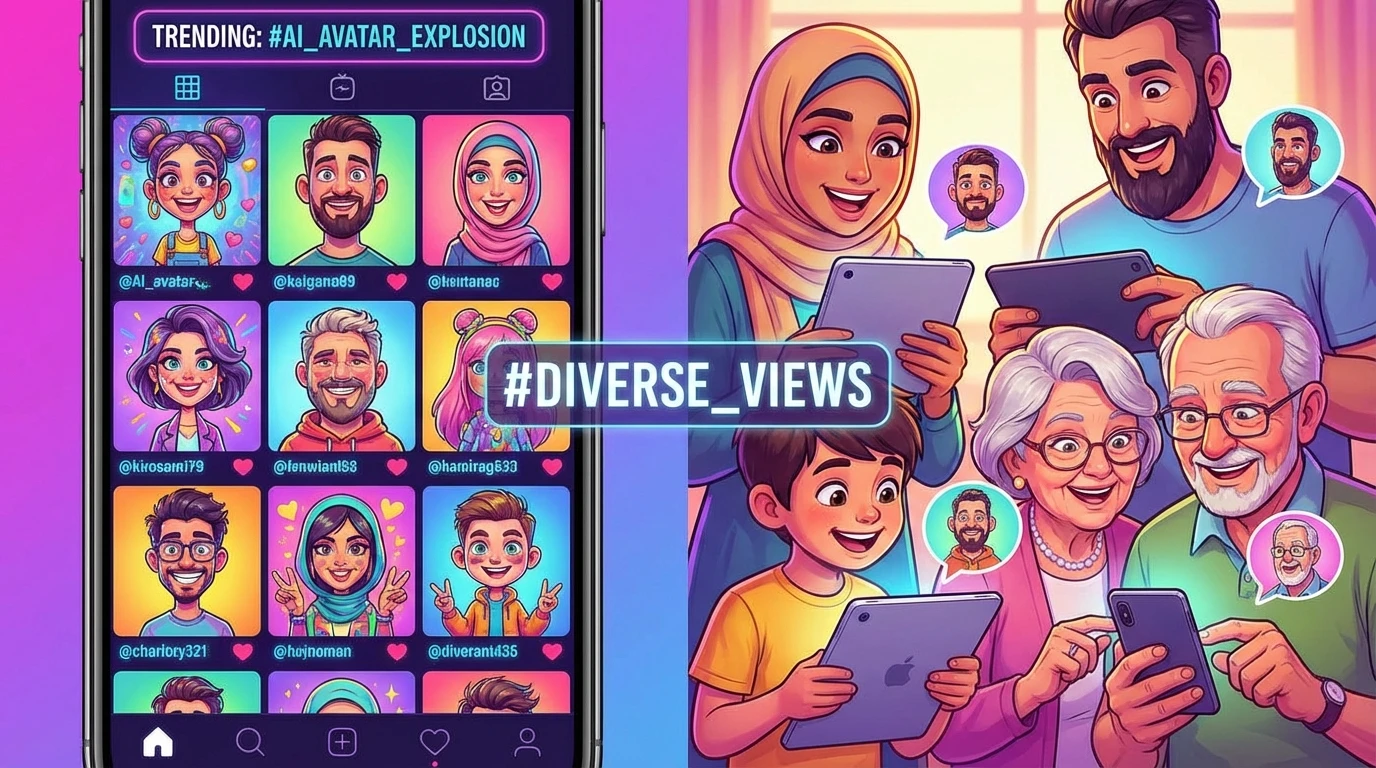
The social media landscape of 2026 is undergoing an unprecedented visual revolution. Whether you open Instagram, Twitter, TikTok, or Xiaohongshu (RED), one type of content dominates your feed — AI caricature (AI cartoon avatars). From everyday users to celebrities, from brand accounts to news outlets, everyone seems to be swept up in this frenzy of "turning yourself into a cartoon."
This isn't just a fleeting trend — it's a profound shift in content consumption behavior. This article will provide an in-depth analysis of why AI caricature achieved viral, explosive growth in 2026 across four key dimensions: technological breakthroughs, user psychology, social currency, and platform algorithms — and what it all means.
1. Technological Breakthroughs: Why 2026 Is the Tipping Point
1.1 A Quantum Leap in Identity Preservation
AI caricature technology didn't emerge in 2026. But before this year, users faced a persistent frustration: "It looks like me, but not quite like me."
The technological advances of 2026 solved this core contradiction:
- Facial feature extraction algorithms can now precisely identify and preserve a user's unique facial structure, proportions, and signature characteristics
- Style transfer stability has dramatically improved — the same photo generates consistent stylistic output across multiple attempts
- High-resolution support means generated avatars can be seamlessly used across platforms, from profile pictures to 4K posters
For the first time, the technology has crossed the chasm from "interesting but unusable" — transforming AI caricature from a toy into a tool with genuine practical value.
1.2 The Speed Revolution in Generation
In 2025, generating an AI caricature took 30 seconds to 2 minutes. In 2026, that time has been compressed to 3–5 seconds.
This means:
- Users can rapidly iterate until they get a result they're happy with
- "Live generation" in social settings becomes possible
- Mass production becomes economically viable, allowing brands to quickly generate large volumes of custom content
Speed improvement isn't just a technical optimization — it's an unlock of entirely new use cases. When generation is fast enough, the act of creation itself undergoes a qualitative transformation.
2. User Psychology: Why People Are Obsessed with Turning Themselves into Cartoons
2.1 Identity Exploration and Self-Expression
Humans have always used visual art to express and explore identity. From prehistoric cave paintings to Renaissance self-portraits, from caricature portraits to memes, reshaping the self through imagery is a deeply rooted psychological need.
AI caricature offers unprecedented possibilities:
- Safe identity experimentation: You can experience "what I'd look like in a different style" without changing your real appearance
- Multifaceted presentation: A single person can generate dozens of avatars in different styles for different contexts
- Idealized but authentic: Compared to heavily filtered selfies, cartoon versions enhance appearance while maintaining recognizability
This psychological mechanism explains why users repeatedly generate, share, and compare — it's fundamentally a digital identity game.
2.2 Manufacturing Social Currency
In the social media age, shareability determines a piece of content's viral potential. AI caricature inherently possesses strong social currency properties:
- Novelty: Seeing a friend's "cartoon version" is an immediate visual delight
- Interactivity: "Make one for me too" becomes a new form of social interaction
- Conversation-starting: Discussions about "does it look like them?" are content in themselves
- Low barrier to entry: No professional skills required — everyone can participate
When a content format simultaneously satisfies the need for self-expression and possesses powerful social sharing properties, viral explosion is virtually inevitable.
3. Social Currency: Why Sharing AI Caricatures Became a Social Behavior
3.1 From "Look at My Photo" to "Look at My Creation"
A traditional selfie is essentially "showing the real me." An AI caricature is essentially "showing the me I chose."
This subtle shift carries profound significance:
- Lower psychological barrier to sharing: A cartoon image feels more lighthearted and humorous than a real photo
- Added creative aura: Sharing isn't just sharing an image — it's showcasing "I participated in creating this"
- Creates conversation opportunities: "Does it look like them?" discussions among friends extend the content's lifecycle
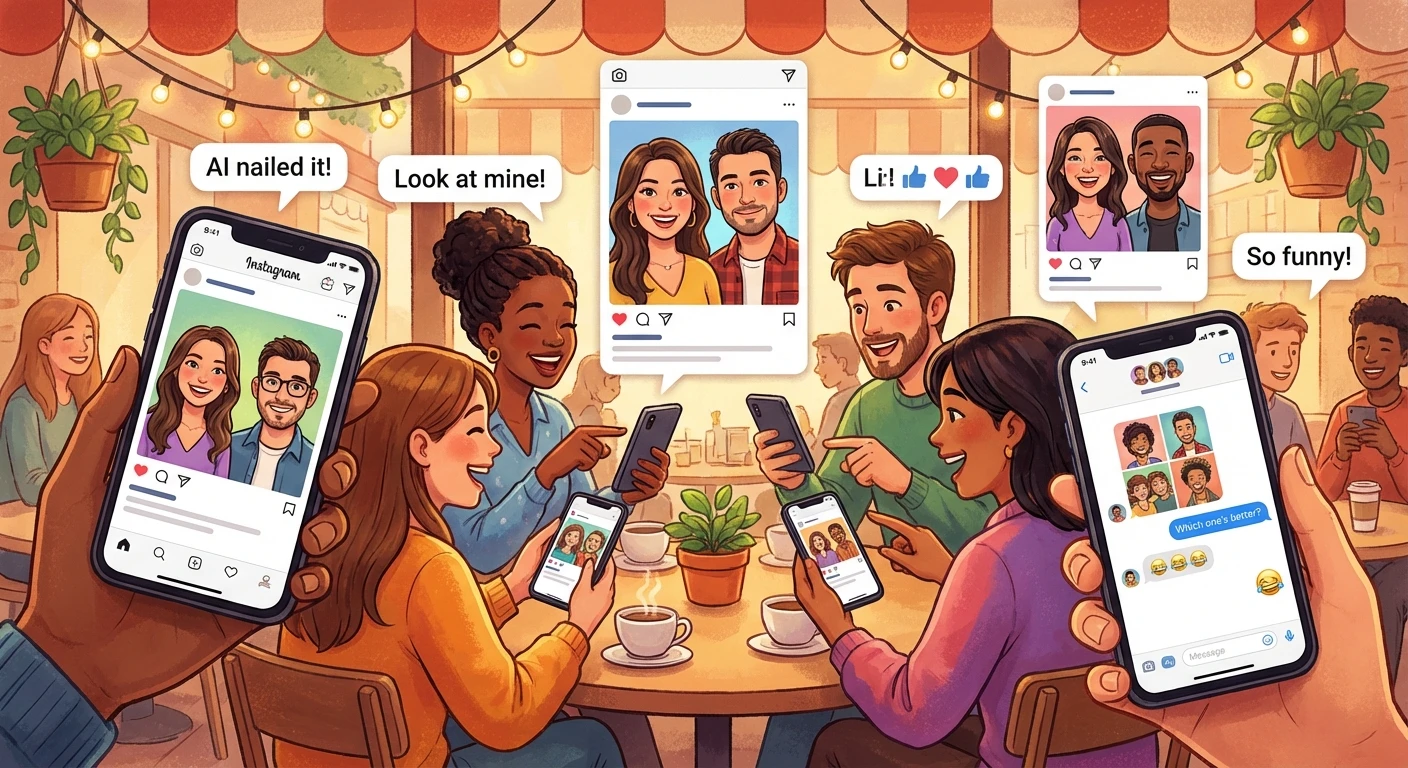
3.2 The Ripple Effect of Viral Spread
AI caricature's spread follows a classic ripple pattern:
- First wave: Early adopters (tech enthusiasts, designers) generate and share
- Second wave: Their friends see it and request "make one for me"
- Third wave: Brands and celebrities spot the traffic opportunity and actively participate
- Fourth wave: Platform algorithms detect high-engagement content and begin amplifying recommendations
Each share naturally pulls surrounding people into participation, forming a self-reinforcing growth flywheel.
4. Platform Algorithms: Why Platforms Fueled the Fire
4.1 Algorithmic Preference for High-Engagement Content
Recommendation algorithms across major social platforms share one common trait: they prioritize high-engagement content.
AI caricature excels on every metric:
- High dwell time: Users carefully compare "does it look like them?", spending more time viewing
- Extremely high comment rate: Every post triggers "make one for me" comments from friends
- Extremely high share rate: Users proactively share generated avatars with friends and group chats
- High retry rate: Users unsatisfied with results generate repeatedly, increasing interaction counts
This type of content is a "scarce resource" for platforms — algorithms naturally tilt traffic in its favor.
4.2 Platform Product Integration
In 2026, mainstream social platforms have rolled out native AI caricature features:
- Instagram and Facebook launched "Become a Cartoon" filters
- TikTok introduced cartoon avatar video templates
- WeChat's mini-program ecosystem saw an explosion of AI cartoon tools
- Xiaohongshu (RED) officially launched a "Cartoon Makeover" campaign
Platform product integration means:
- Access barriers drop even further (no external tools needed)
- Traffic entry points become more direct (searchable and discoverable)
- Content consumption becomes smoother (entire workflow within the platform)
Platforms aren't just passively accepting the trend — they're actively driving it.
5. The Numbers Speak: How Big Is AI Caricature in 2026?
Based on public data and industry observations, AI caricature showed explosive growth in 2026:
- Global monthly active users of AI cartoon tools: Grew from 5 million in early 2025 to over 250 million in early 2026 — approximately 50x growth
- Related social media posts per day: Grew from 1 million per day in early 2025 to 80 million per day in early 2026 — approximately 80x growth
- Average share rate: Increased from 15% to 45% — 3x growth
- Related hashtag impressions: Grew from 1 billion to over 50 billion — approximately 50x growth
Behind these numbers is a behavioral paradigm shift — AI caricature is evolving from a "niche tool" to an "everyday essential."
6. Brand Opportunities: How Businesses Can Capitalize on This Wave
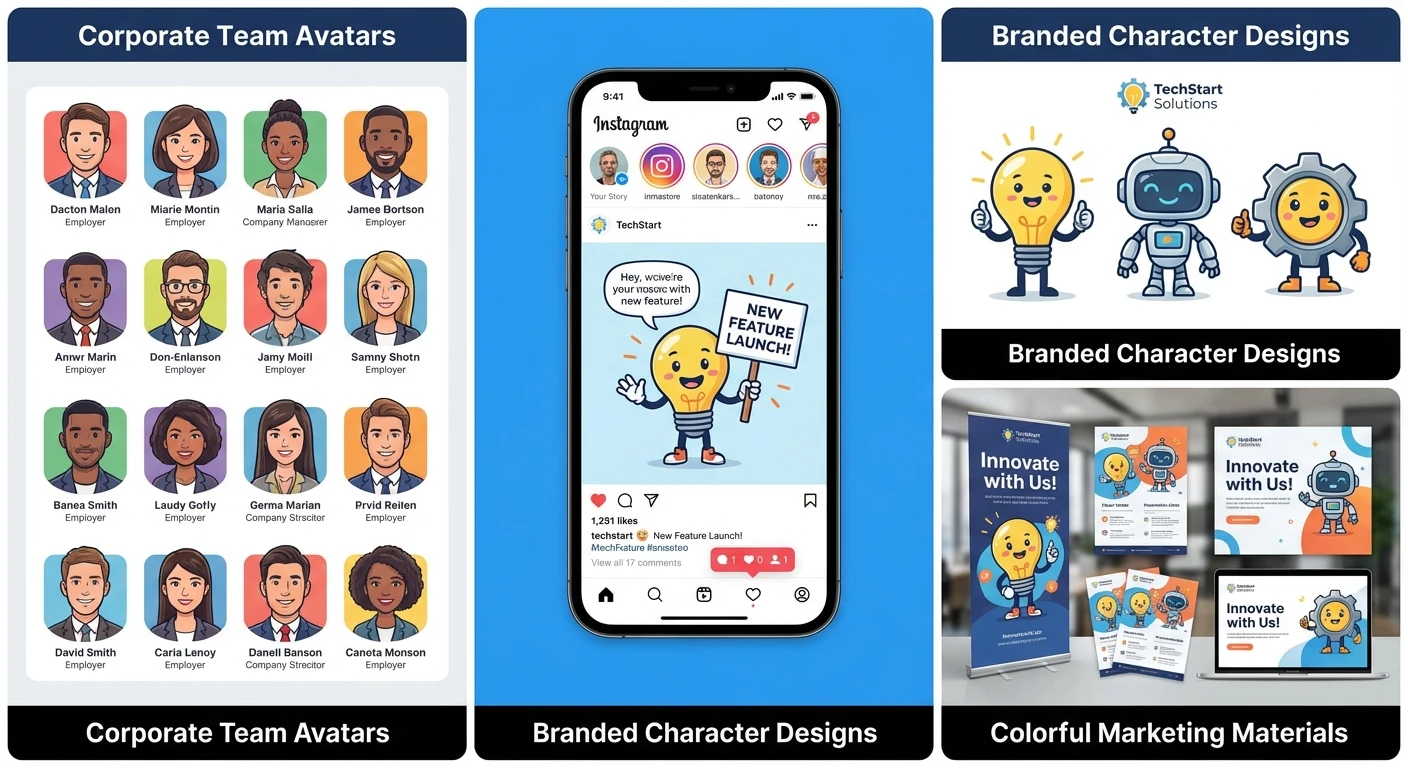
6.1 Custom Brand Avatars
More and more brands are offering custom AI caricatures for employees and users:
- Corporate brand consistency: Teams uniformly adopt brand-styled cartoon personas
- User engagement campaigns: Brands launch "generate your brand character" activities to boost interaction
- IP collaborations: Cartoon personas combined with brand IPs create fresh talking points
6.2 Marketing Content Innovation
AI caricature provides new content formats for marketing:
- Trend-jacking: Any brand can quickly roll out brand-styled cartoon avatars
- User-generated content: Encouraging users to create brand-themed cartoon personas drives secondary distribution
- Online-to-offline integration: Offline events use AR technology to generate cartoon personas in real time
7. Challenges and Outlook
7.1 Current Challenges
Despite strong momentum, AI caricature still faces several challenges:
- Homogenization risk: When everyone uses similar tools, differentiation gradually fades
- Privacy concerns: Uploading photos for AI processing always raises privacy debates
- Uneven quality: Lower technical barriers mean low-quality outputs may degrade user experience
- Aesthetic fatigue: When the hype subsides, what will remain?
7.2 Future Outlook
Based on current trends, we can anticipate:
- Deeper personalization: From avatars to full-body; from static to dynamic; from images to video
- Style diversification: More artistic styles, cross-cultural styles, and custom brand styles
- Scenario convergence: Deep integration with VR/AR, digital twins, and metaverse environments
- Commercial maturation: Stabilization of business models from free tools to premium value-added services
FAQ
Q: Will AI caricature replace traditional portrait photography? A: Not entirely — but the two will coexist. AI caricature is ideal for quick social sharing and creative expression; traditional portraits remain suited for formal occasions and brand imagery.
Q: How do you evaluate the quality of an AI caricature tool? A: Three key metrics: 1) Identity preservation (does it actually look like the person?); 2) Style consistency (are multiple generations consistent?); 3) Output resolution (does it support the dimensions required by various platforms?).
Q: Does AI caricature pose privacy risks? A: Any tool that requires photo uploads involves privacy considerations. Choose service providers with clear privacy policies, and delete uploaded photos promptly — these are fundamental principles for protecting your privacy.
Q: What should brands keep in mind when using AI caricature? A: Ensure the style aligns with brand identity; obtain user authorization; avoid over-marketing that triggers backlash; pay attention to copyright and portrait rights issues.
Q: How long will this trend last? A: Historically, all viral trends go through phases of explosion, plateau, and stabilization. AI caricature has already moved past the purely "curiosity-driven" phase into the "value-driven" phase, which means it will establish a stable presence in users' everyday toolkit.
Conclusion
The viral explosion of AI caricature in 2026 is the result of four converging forces: technology maturity, user psychology, social demand, and platform amplification. It's not just another flash-in-the-pan trend — it's a paradigm shift in how we express our digital identities.
When everyone can effortlessly own a "digital persona," our relationship with the digital world is quietly transforming. This revolution is just beginning — and you're already part of it.
Ready to generate your first AI caricature? Try NanoEditor AI Caricature now and join the digital identity revolution of 2026.
Recommended Reading
More Nano Banana Pro guides and workflows you may find useful.
NanoEditor Now Supports Google's Nano Banana Pro Model
What the Nano Banana Pro integration means for detail quality, style accuracy, and image-to-image results—plus tips, prompts, and a limited-time offer.
The Virtual Influencer Formula: Keep One Face Consistent
Stop random faces. Use Nano Banana Pro multi-image fusion plus image-to-image workflows to keep one AI character consistent across 100+ photos.
2026 Ecommerce Hero Image AI Tools: Photoroom vs Claid vs PicCopilot
A practical 2026 benchmark of Photoroom, Claid, and PicCopilot for ecommerce hero image production, including prompt templates, workflow setup, and decision guidance by team size.