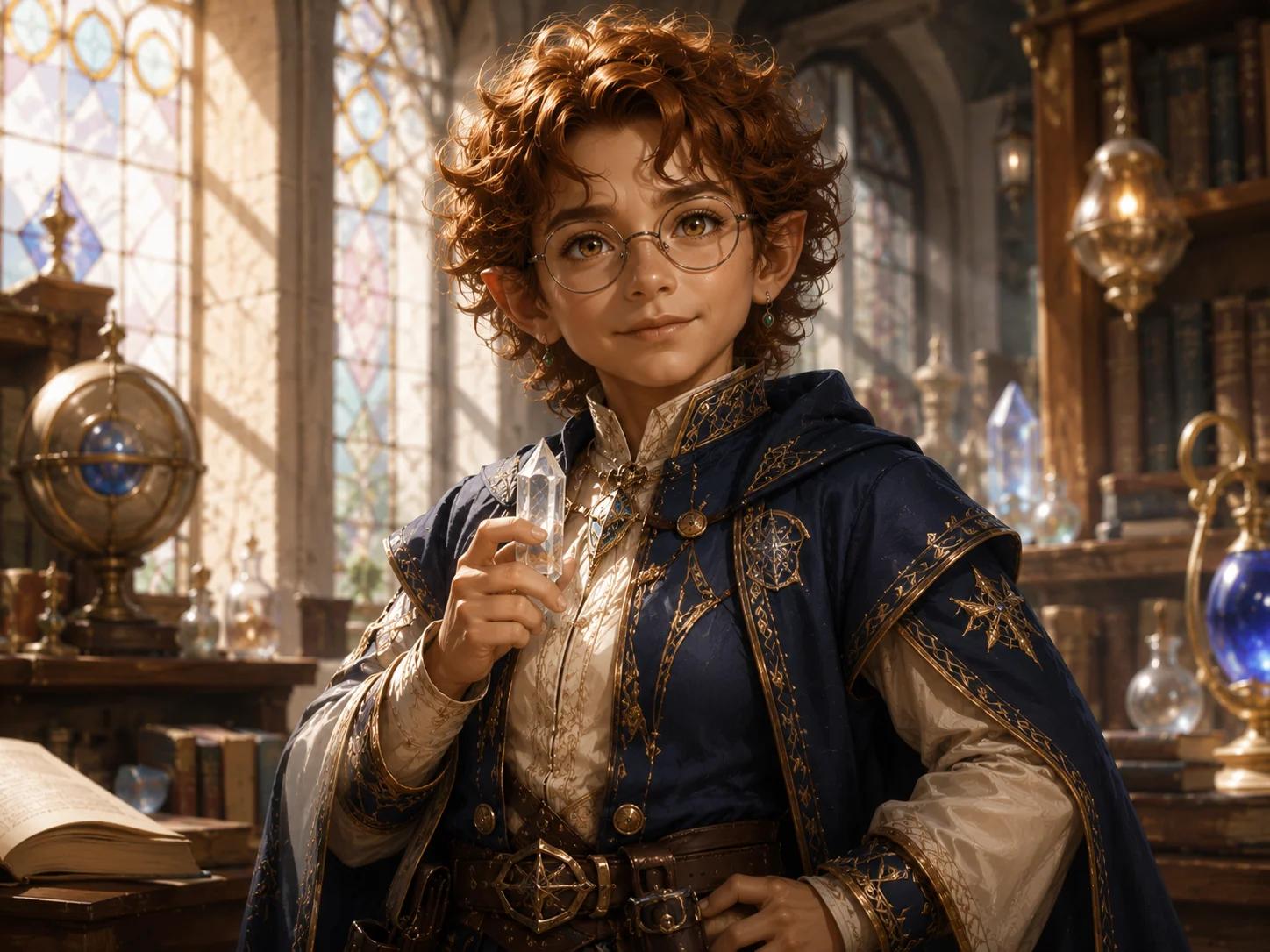
Gnome Wizard
Layered robes, a visible book, and a compact magical cue establish the wizard role while the face remains the center of the portrait.
D&D wizard character art
A D&D wizard portrait generator turns robes, spell focus, books, visible materials, expression, and controlled magical effects into one focused upper-body fantasy portrait. Start with Wizard preselected, decide what makes the character look practiced rather than generic, and refine the brief in the real generator below.
Character Brief
Complete the ancestry, class and portrait fields, then add one defining detail you want reflected in the image.
Free portraits use Epic Fantasy. Paid plans unlock all styles.
Hero unlocks HD and 4K output.
Create one standalone high-quality tabletop RPG character portrait of an adult female Human Wizard. Identity: natural human facial features, expressive eyes, realistic skin detail. Class and gear defaults: embroidered robes, spellbook or crystal focus, arcane detail, intelligent composed presence. Composition: upper-body portrait from head to waist, centered character, eye-level camera, not a close-up headshot, not a full-body distant shot, face clearly visible, torso, shoulders, outfit, and key gear visible, face occupies about 25-30% of the image. Lighting: soft readable portrait lighting, clear eyes, natural skin or material detail, controlled shadows, no face hidden in shadow. Background: softly blurred low-detail fantasy setting, supports the character without competing with the face or silhouette. epic fantasy digital painting, campaign-book energy, richly detailed costume and armor, heroic scale Avoid: no text, no watermark, no logo, no UI, no character sheet layout, no distorted hands, no extra fingers, no extra limbs, no cropped head, no blurry face, no low quality.
One successful guest portrait. Failed generations do not consume the trial.
Portrait Reveal
Your generated fantasy RPG portrait appears here, ready to review and download.
Your portrait will appear here
Complete the character brief and generate one focused fantasy RPG portrait.
D&D wizard portrait examples
A strong wizard portrait shows the person first, then uses one robe silhouette, one study or spell object, and restrained magical light to explain the role. The examples below focus on readable faces, materials, and equipment instead of filling the frame with effects.
Layered robes, a visible book, and a compact magical cue establish the wizard role while the face remains the center of the portrait.

A refined fantasy spellcaster reference shows how clothing shape, posture, and one role-defining object can carry expertise without hiding the face.

A quieter fantasy character reference demonstrates how material, expression, and a single object can suggest study and experience without excessive effects.
Build a readable wizard brief
Treat wizard identity as a visual hierarchy. Establish the face and silhouette, choose one tool of study or spellcasting, then add material and magical cues only when they remain readable in an upper-body crop.
Use a robe collar, layered coat, mantle, hood pushed back, or another clean shoulder shape so the role reads before small accessories appear.
Choose a staff section, wand, crystal, amulet, or other compact focus that fits inside the crop without becoming larger than the character’s face.
A book, notes, scroll case, spectacles, ink stain, or practical tool can communicate study and experience more clearly than generic glowing symbols.
Name worn wool, embroidered cloth, polished wood, old leather, brass, paper, or another material so the costume feels specific instead of becoming a generic robe.
Use one controlled glow, reflected color, or small spell cue and keep the strongest contrast on the eyes, expression, and role-defining object.
Wizard portrait use cases
This workflow creates one upper-body square portrait for a single character. It is a visual reference for tabletop play and storytelling, not a spell list, character sheet, rules build, token set, full-body scene, or party image.
Create a wizard portrait for a campaign profile, private wiki, character notes, or a session-zero introduction.
Use books, writing tools, layered materials, age cues, and a deliberate expression to distinguish a teacher, researcher, or court mage.
Use controlled posture, one unusual focus, worn clothing, or restrained light to create an antagonist without turning the portrait into an effects showcase.
FAQ
Character Guides
Use these practical guides to choose visible details, write a focused character brief, and prepare the final image for campaign use.
Wizard Portrait Prompt Guide
Build a clear D&D wizard portrait prompt with robes, spell focus, study objects, expression, lighting, and restrained magic for one readable fantasy portrait.
Read guideWizard Character Design Guide
Plan D&D wizard character design with silhouette, robes, spell focus, books, materials, color, and restrained magic for a clear upper-body fantasy portrait.
Read guideD&D Portrait Guide
Learn how to write a focused D&D character portrait prompt using ancestry, class, equipment, appearance, mood, composition, and a single readable story detail.
Read guideUse a Wizard-specific prompt order for face, robes, spell focus, study objects, materials, light, and restrained magical effects.
Keep the wizard face, robes, study objects, and magical effects readable with a controlled lighting plan.
Plan silhouette, robes, spell focus, study objects, materials, color, and controlled magical effects before you generate.
Use the full D&D portrait brief when you want broader ancestry, role, equipment, appearance, and mood controls.
Build an elf portrait when ancestry cues such as ears, face shape, hair, and light are more important than a class-first brief.
Use a broader prompt framework for subject, equipment, appearance, mood, composition, and revision choices.