
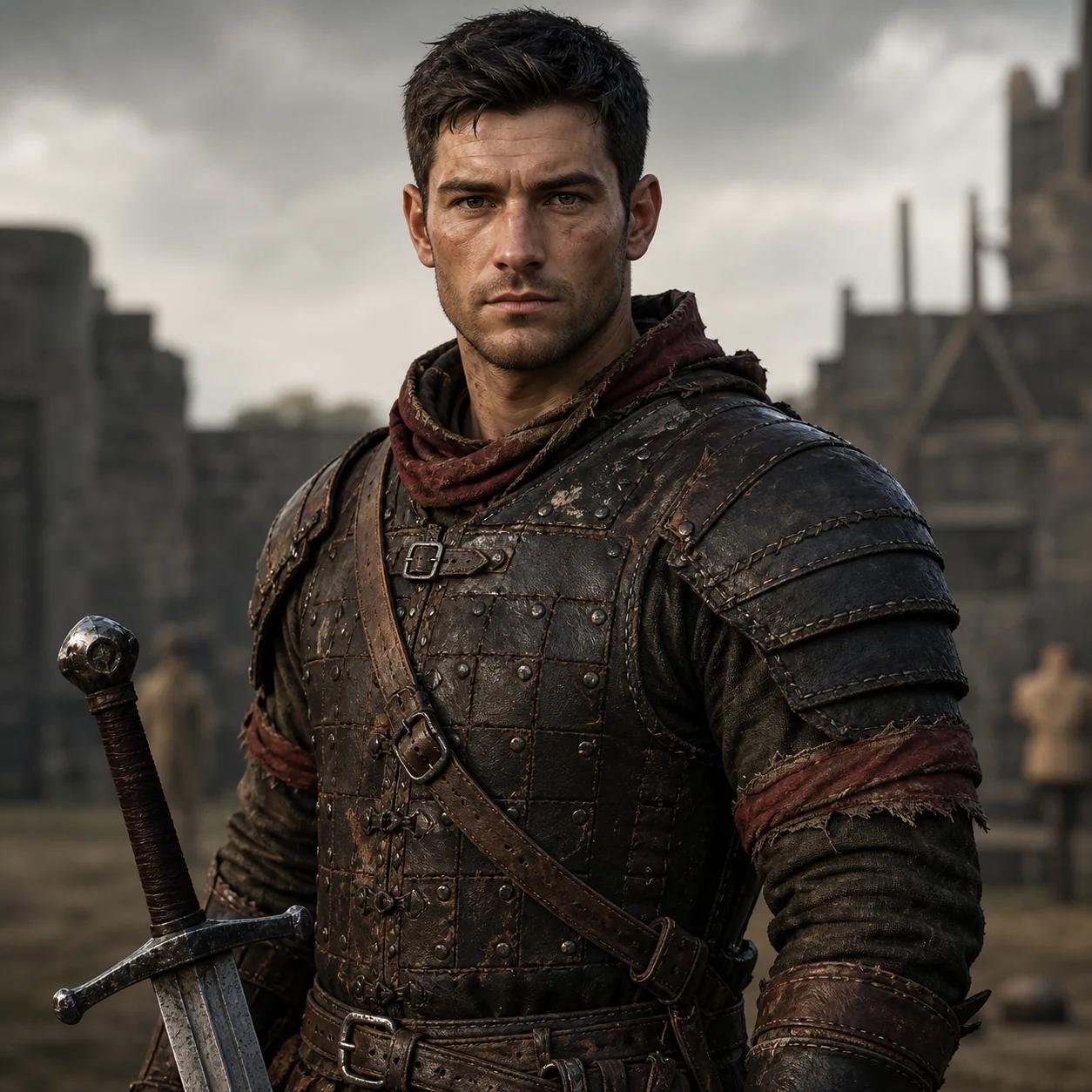
Battle-Tested Fighter
An original human Fighter uses worn brigandine, repaired leather straps, a low-held longsword, a weathered scarf, and a calm expression to show discipline without turning the image into an action scene.
D&D fighter character art
A D&D fighter portrait generator turns a clear face, practical armor, a readable weapon, disciplined posture, battle-worn details, and a focused mood into one upper-body fantasy portrait. Start with Fighter preselected, choose the details that show how this character fights and travels, and build the image in the real generator below.
Character Brief
Complete the ancestry, class and portrait fields, then add one defining detail you want reflected in the image.
Free portraits use Epic Fantasy. Paid plans unlock all styles.
Hero unlocks HD and 4K output.
Create one standalone high-quality tabletop RPG character portrait of an adult female Human Fighter. Identity: natural human facial features, expressive eyes, realistic skin detail. Class and gear defaults: practical battle armor, weapon-ready posture, sword or axe detail, disciplined warrior presence. Composition: upper-body portrait from head to waist, centered character, eye-level camera, not a close-up headshot, not a full-body distant shot, face clearly visible, torso, shoulders, outfit, and key gear visible, face occupies about 25-30% of the image. Lighting: soft readable portrait lighting, clear eyes, natural skin or material detail, controlled shadows, no face hidden in shadow. Background: softly blurred low-detail fantasy setting, supports the character without competing with the face or silhouette. epic fantasy digital painting, campaign-book energy, richly detailed costume and armor, heroic scale Avoid: no text, no watermark, no logo, no UI, no character sheet layout, no distorted hands, no extra fingers, no extra limbs, no cropped head, no blurry face, no low quality.
One successful guest portrait. Failed generations do not consume the trial.
Portrait Reveal
Your generated fantasy RPG portrait appears here, ready to review and download.
Your portrait will appear here
Complete the character brief and generate one focused fantasy RPG portrait.
D&D fighter portrait examples
A strong fighter portrait shows a person before it shows a weapon. Use a face-first composition, one practical armor silhouette, one signature weapon, and a small amount of visible wear so the character reads clearly in a square crop.
An original human Fighter uses worn brigandine, repaired leather straps, a low-held longsword, a weathered scarf, and a calm expression to show discipline without turning the image into an action scene.
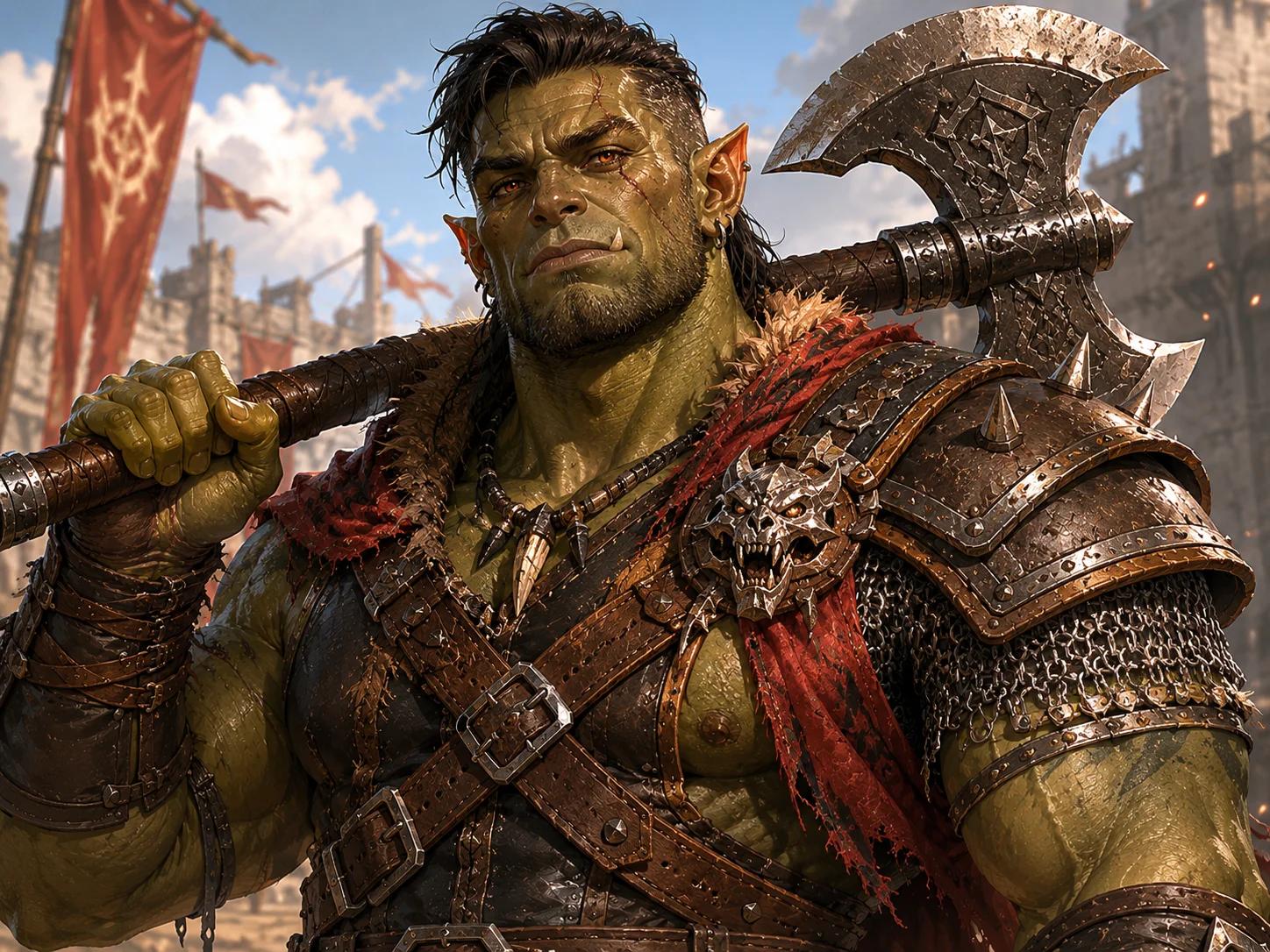
A broad stance, layered battle gear, and a large axe show how ancestry, equipment, and lived-in materials can support a Fighter identity while the face remains the visual anchor.
Build a readable fighter brief
Treat Fighter as a visual relationship between training, equipment, and the individual. Use the real generator fields above to separate identity, face, armor and weapon, posture, and one personal mark before you preview the prompt and generate.
Keep Fighter selected under Class, then choose Ancestry, Presentation, and Art style. These controls establish the person and visual treatment before equipment or atmosphere enters the brief.
Put face, hair, scars, and other readable identity cues in Visible appearance—for example, “calm scarred face, close-cropped dark hair.” Keep the face specific before adding battle wear.
Use Signature equipment for one armor hierarchy and one readable weapon, such as “repaired charcoal brigandine, low-held longsword with a wrapped grip.” Keep both secondary to the face.
Use Mood or setting for a balanced three-quarter stance, controlled expression, quiet location, and face-first light. A compact posture reads better than a full combat action in the square crop.
Use Additional detail for one faded company scarf, repaired buckle, or personal keepsake. Open Preview the generated prompt, remove competing details, select Generate portrait, and revise one field if the first result misses the brief.
Fighter portrait use cases
The workflow creates one square upper-body portrait for a single character. It can support tabletop and story references, but it does not create a character sheet, game statistics, rules build, circular token, full-body scene, or party image.
Create a face-first Fighter reference for a campaign profile, private character notes, session introduction, or personal fantasy art collection.
Use maintained or repaired gear, measured posture, and one practical weapon to distinguish a watch officer, caravan guard, hired blade, or veteran escort.
Show experience through scuffed armor, a worn grip, an old scar, a controlled expression, or a distinctive repair while keeping the Fighter role legible.
FAQ
Character Guides
Use these practical guides to choose visible details, write a focused character brief, and prepare the final image for campaign use.
Fighter Portrait Prompt Guide
Build a D&D fighter portrait prompt for a guard, mercenary, duelist, or veteran with clear identity, practical gear, trained posture, and face-first lighting.
Read guideFighter Character Design Guide
Learn D&D fighter character design with practical armor, signature weapons, disciplined posture, battle-worn details, and visual history for readable RPG art.
Read guideFighter vs Paladin Design Guide
Compare fighter vs paladin character design through clothing, gear maintenance, emblems, and posture, then create two distinct, readable fantasy RPG portraits.
Read guideTranslate training, posture, armor, weapon choice, battle wear, and personal history into a focused portrait brief.
Use the broader guided brief when you want flexible ancestry, role, equipment, appearance, and mood controls.
Explore an adjacent martial portrait workflow built around protective posture, readable armor, an emblem, and controlled light.
Compare how conviction, armor condition, personal marks, and protective objects shape a different martial portrait.
Use a broader prompt order for identity, equipment, appearance, mood, composition, and controlled revision.