
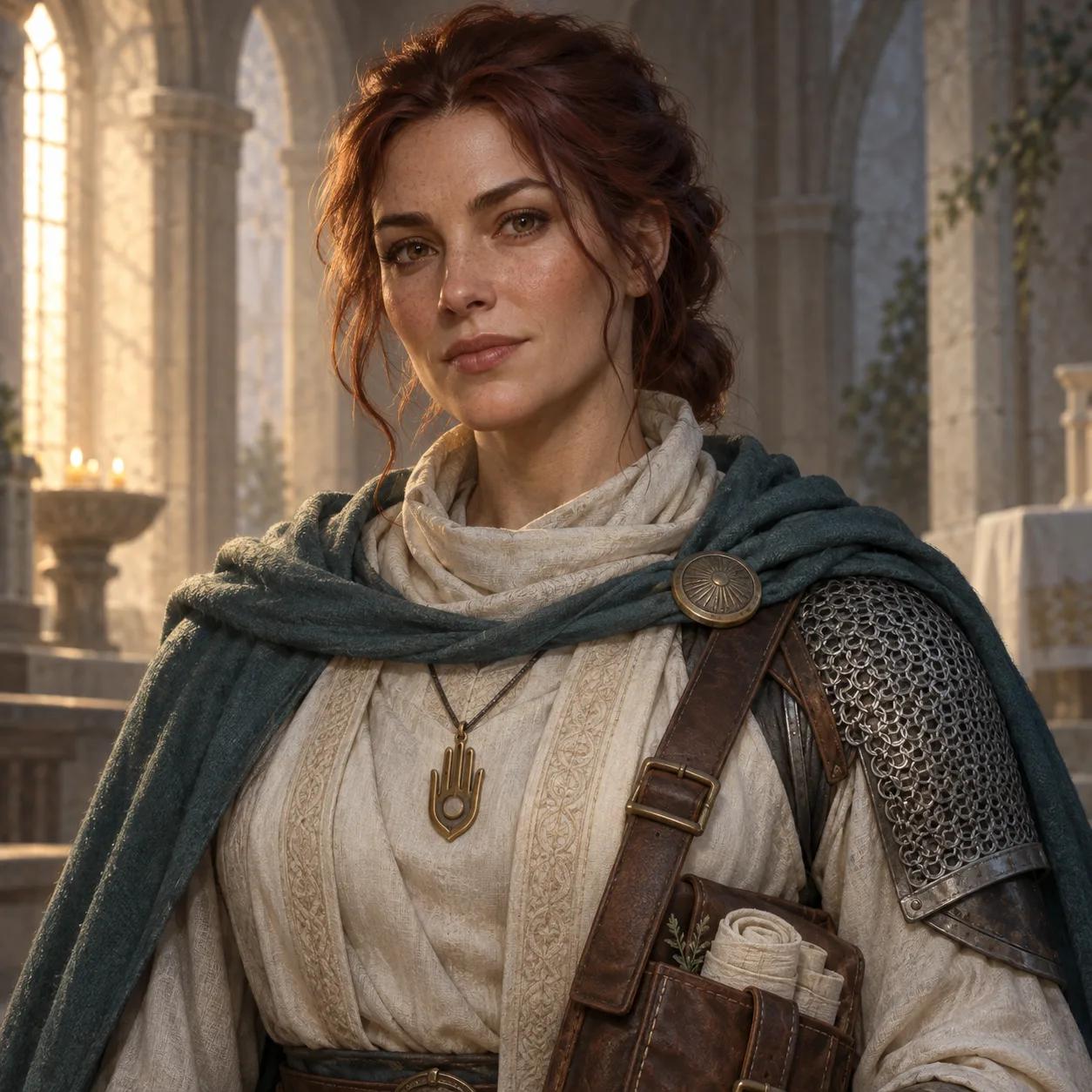
Traveling Field Cleric
An original human Cleric combines warm ivory vestments, a muted teal cloak, one mail shoulder, a simple open-hand pendant, and a compact bandage satchel to show compassionate service without resembling a plated champion.
D&D cleric character art
A D&D cleric portrait generator turns a clear face, layered vestments, practical armor, one original holy symbol, useful travel gear, and a grounded mood into one square upper-body fantasy portrait. Start with Cleric preselected, decide how faith and daily work appear on the character, and build the image in the real generator below.
Character Brief
Complete the ancestry, class and portrait fields, then add one defining detail you want reflected in the image.
Free portraits use Epic Fantasy. Paid plans unlock all styles.
Hero unlocks HD and 4K output.
Create one standalone high-quality tabletop RPG character portrait of an adult female Human Cleric. Identity: natural human facial features, expressive eyes, realistic skin detail. Class and gear defaults: chainmail or travel vestments, holy talisman, mace or prayer focus, steady compassionate presence. Composition: upper-body portrait from head to waist, centered character, eye-level camera, not a close-up headshot, not a full-body distant shot, face clearly visible, torso, shoulders, outfit, and key gear visible, face occupies about 25-30% of the image. Lighting: soft readable portrait lighting, clear eyes, natural skin or material detail, controlled shadows, no face hidden in shadow. Background: softly blurred low-detail fantasy setting, supports the character without competing with the face or silhouette. epic fantasy digital painting, campaign-book energy, richly detailed costume and armor, heroic scale Avoid: no text, no watermark, no logo, no UI, no character sheet layout, no distorted hands, no extra fingers, no extra limbs, no cropped head, no blurry face, no low quality.
One successful guest portrait. Failed generations do not consume the trial.
Portrait Reveal
Your generated fantasy RPG portrait appears here, ready to review and download.
Your portrait will appear here
Complete the character brief and generate one focused fantasy RPG portrait.
D&D cleric portrait examples
A strong cleric portrait keeps the person more prominent than the symbol. Use one clear garment layer, one practical armor zone, one original emblem, and one item from the character’s daily work so every detail survives the square crop.
An original human Cleric combines warm ivory vestments, a muted teal cloak, one mail shoulder, a simple open-hand pendant, and a compact bandage satchel to show compassionate service without resembling a plated champion.

A grey braided beard, ochre travel cloak, compact hammer, and layered mountain armor show how ancestry, climate, equipment, and faith can share one readable portrait hierarchy.
Build a readable cleric brief
Treat Cleric as a relationship between the individual, their service, and the objects they carry. Use the real generator fields above to establish the person first, then organize clothing, armor, one symbol, work gear, and light before generating.
Keep Cleric selected under Class, then choose Ancestry, Presentation, and Art style. These controls establish the character and visual treatment before clothing or symbols enter the brief.
Use Visible appearance for age, face shape, hair, complexion, expression, and one memorable feature. Keep the face specific enough to remain the emotional center of the portrait.
Use Signature equipment for one main vestment, one armor zone, and one work item such as a pendant, satchel, book, staff edge, or compact hammer. Give each object a visible job.
Use Mood or setting for calm attention, stern resolve, road-worn fatigue, a quiet sanctuary, a field camp, or another grounded scene with face-first light.
Use Additional detail for one repair, keepsake, color accent, or original symbol. Open Preview the generated prompt, remove competing details, select Generate portrait, and revise one field if the first result misses the hierarchy.
Cleric portrait use cases
The workflow creates one square upper-body portrait for a single character. It can support tabletop and story references, but it does not create a character sheet, game statistics, official holy symbol, circular token, full-body scene, or party image.
Create a face-first Cleric reference for a campaign profile, private character notes, session introduction, or personal fantasy art collection.
Use clean or repaired cloth, a bandage roll, herb pouch, journal, pendant, or warm expression to define a healer, counselor, archivist, or local guide.
Combine road-worn layers, one readable armor zone, a compact tool or weapon, and a steady posture without turning the portrait into a Paladin or full combat scene.
FAQ
Character Guides
Use these practical guides to choose visible details, write a focused character brief, and prepare the final image for campaign use.
D&D Portrait Guide
Learn how to write a focused D&D character portrait prompt using ancestry, class, equipment, appearance, mood, composition, and a single readable story detail.
Read guideCharacter Design Guide
Describe a D&D character’s face, ancestry, clothing, equipment, expression, and story marks with enough visual detail to create a readable fantasy portrait.
Read guideVTT Portrait Guide
Choose practical VTT portrait and token dimensions, safe crops, file formats, face scale, backgrounds, and export settings for clear tabletop character art.
Read guidePlan readable vestment layers, practical armor, an original holy symbol, travel gear, materials, color, and portrait revision.
Use the broader guided brief when you want flexible ancestry, class, equipment, appearance, and mood controls.
Use a broader framework for silhouette, face, clothing, equipment, color, and visible story marks.
Keep compassion, resolve, suspicion, or fatigue readable through the eyes, mouth, posture, crop, and light.
Use warm or sacred-looking light without hiding the face, flattening materials, or replacing the character with an effect.