
Key takeaways
Begin with a specific face and expression so supernatural details support a person instead of replacing one.
Choose one visible pact focus with a clear shape, location, and condition that can survive a square crop.
Use one ring, chain, clasp, or earring as a personal anchor rather than covering the portrait in generic occult decoration.
Build a coherent shoulder silhouette from two or three materials, then reserve one controlled color for the pact cue.
Let posture and restrained violet light guide attention to the eyes, focus, or jewelry without hiding the face.
Start with a face that carries the pact
A Warlock becomes memorable when the face suggests a life before the pact and a choice made after it. Begin with a concrete facial structure, age range, complexion, hairstyle, and expression instead of opening with smoke, runes, or a dramatic color effect. A watchful gaze, tired mouth, lifted brow, or carefully controlled calm can imply pressure more clearly than a paragraph about an unseen entity.
Keep the pact as a relationship the portrait can hint at, not a complete invisible biography. Decide whether the character looks protective, indebted, curious, defiant, relieved, or trapped, then select one visible cue that supports that feeling. The same focus can feel like a treasured safeguard in one portrait and an uncomfortable obligation in another because the face, hand position, and condition change the reading.
Match the relationship to visible evidence instead of relying on a generic purple glow. A protective Warlock can square the shoulders and hold a repaired focus close; an indebted one can keep the grip careful and the expression guarded; a curious one can present the object openly under clear light; and a defiant one can turn the focus away while meeting the viewer directly. Expression, grip, object condition, and light should point to the same relationship so the design remains specific at thumbnail size.
Test the face before adding supernatural marks. If the eyes and mouth are hidden by hair, shadow, glow, or a mask, remove one layer and restore the expression. The pact should add a question for the viewer while the character’s identity remains the answer they can see first.
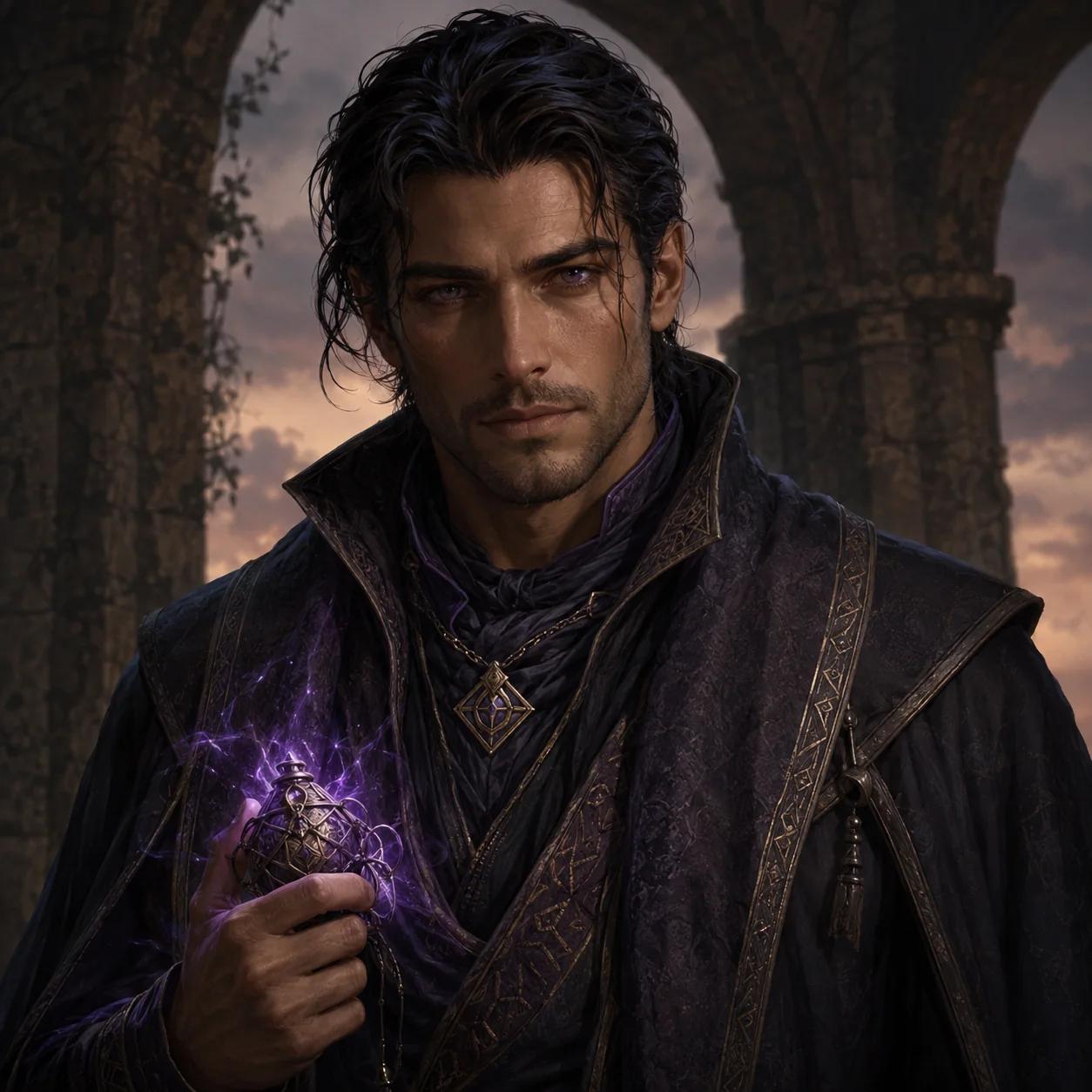
- Choose one present emotion and one memorable facial feature before writing the pact clue.
- Describe visible cues such as eyes, mouth, hair, hands, shoulders, or a worn mark.
- Keep the face unobstructed so a small portrait can communicate the character without hidden lore.
Choose one visible pact focus
A pact focus gives an abstract relationship a shape the viewer can recognize. Choose one object that can sit near the chest, shoulder, or hand: an ornate pendant, carved token, narrow book, small staff, ring, crystal, or another supported focus. Give it a broad silhouette and one material so it remains distinct from the clothing and does not become a tiny pile of symbols.
Location changes the story. A focus held close to the chest can feel guarded or cherished; one resting in an open hand can feel offered or negotiated; one attached to a chain can read as a daily burden or familiar tool. Use posture and grip to explain how the character relates to it, then keep the object secondary to the face. The viewer should notice the focus after recognizing the person.
Condition adds more identity than extra ornament. A polished edge, rubbed engraving, repaired cord, hairline crack, or darkened metal can suggest care, use, or risk. Avoid relying on small lettering, repeated sigils, or a full magical scene because those details usually collapse into texture in an upper-body square crop.
Focus test
Name the one object that makes the pact visible. If the brief has three equally important focuses, keep the strongest shape and turn the others into quiet material or color echoes.
Use jewelry to show personal history
Jewelry can carry the private side of Warlock character design because it sits close to the face and chest. Choose one ring, chain, clasp, earring, cuff, or pendant with a clear reason to belong to this person. It might be a keepsake, a negotiated gift, a protective habit, a reminder of a promise, or simply an object they wear every day. The reason shapes the material and placement, while the portrait only needs to show the visible result.
Keep the jewelry readable by limiting its scale and repetitions. A bronze pendant against a muted coat, one silver ring near the focus, or a dark chain breaking a pale collar can guide the eye without turning the character into an accessory display. Use one unusual shape or condition—flattened, repaired, carefully polished, mismatched, or worn smooth—rather than adding several unrelated occult motifs.
Separate the personal anchor from the pact focus when both appear. The focus explains the supernatural relationship; the jewelry can explain what the character chooses to protect, remember, or carry. If the two objects merge, change their value, material, or position so the viewer can tell which is the story anchor and which is the role cue.
- Pick one piece of jewelry and explain its visible condition, placement, or daily use.
- Use contrast near the collar or chest while leaving the eyes and mouth open to the viewer.
- Let personal jewelry and the pact focus have different visual jobs instead of repeating one symbol.
Build a Warlock silhouette with clothing and color
Clothing grounds the pact in the character’s ordinary life. Choose a dominant shoulder shape such as a travel coat, layered robe, fitted jacket, hoodless cloak, leather mantle, or weathered tunic, then add one supporting layer that explains the climate or work. The silhouette should tell the viewer how this person moves through the world before jewelry and magic add their second meaning.
Use two or three material families with different light responses. Worn leather, brushed bronze, heavy wool, matte cotton, carved wood, and dark metal can separate the coat, focus, and personal anchor without requiring decorative seams everywhere. Condition matters: a carefully maintained clasp, frayed cuff, rain-darkened shoulder, or polished focus tells a more specific story than “mysterious clothing.”
Reserve one controlled color for the pact relationship or emotional temperature. Violet can appear as a small reflection, edge light, stone tint, or thread rather than filling the background and swallowing the face. Pair it with a neutral and one supporting color so the viewer can distinguish skin, jewelry, clothing, and focus at thumbnail size.
- Choose one outer silhouette and two or three materials before adding decorative symbols.
- Give each material a separate job in the crop: frame the face, support the focus, or define the shoulders.
- Use violet as a controlled accent or light source instead of making every surface glow.
Use posture and violet light without hiding the face
Posture connects the Warlock to the focus and the viewer. A hand close to the pendant can suggest protection; an open palm can suggest negotiation; a turned shoulder can make the character feel guarded; and a steady forward stance can make the character appear ready to accept a cost. Choose one readable gesture and keep the hands, face, and main object large enough to survive the square composition.
Give the violet light one job. It might reveal the focus, trace one coat edge, catch a ring, or separate the shadowed cheek from a quiet background. A soft neutral key light can preserve the eyes while a restrained violet rim supplies the supernatural clue. If the light becomes the first thing the viewer sees, lower its area, brightness, or saturation before adding another effect.
Review the silhouette at the size where the portrait will be used. Remove sparks, smoke, floating text, distant figures, and unrelated scenery when they compete with the head and shoulders. The goal is not a flat image; it is a clear path from expression to focus to one controlled atmospheric cue.
Light check
Squint at the portrait or reduce it to a thumbnail. You should still find the face first, the pact focus second, and the violet accent third.
Turn the design into a focused portrait brief
Write the brief in the order the viewer should read it: individual identity, Warlock role, face and expression, pact focus, jewelry, clothing silhouette, two or three materials, posture, controlled color, quiet background, and upper-body square crop. For example: “A calm human Warlock with dark swept hair, a purple and bronze travel coat, one worn pendant, and an ornate pact focus held near the chest; restrained violet light catches the focus while the face stays clear.” Every phrase gives the generator a visible choice instead of asking it to invent an entire backstory.
Review the first result by category. If the character looks like a generic spellcaster, make the face and clothing more specific before adding stronger effects. If the pact is unclear, enlarge or reposition one focus and give it a condition. If jewelry disappears, simplify the coat near the chest or change the contrast. If the face is lost in violet light, reduce the background effect and restore a neutral key on the eyes.
Change one category at a time and preserve the anchors that already work. NanoEditor creates one image per generation, so a controlled revision makes comparisons easier. One successful guest generation is shared across the site; Google signup grants 20 credits, each portrait costs 10 credits, failed generations do not consume the allowance, and account results are private by default. When the brief is ready, open the D&D Warlock portrait generator to create one focused upper-body square portrait.
- First pass: face, expression, focus, jewelry, clothing, posture, color, light, and crop.
- Thumbnail check: confirm that the face, focus, shoulders, and one jewelry cue remain distinct.
- Revision check: fix the largest overlap or contrast problem while keeping the strongest identity anchor.
- Scope check: keep the result to one portrait, not a character sheet, rules build, token set, or party scene.
Put the guide into practice
Create a D&D Warlock portrait
Start with Warlock preselected, then turn a clear face, pact focus, jewelry, clothing, and mood into one focused upper-body portrait.
Start creating